Executive Summary
In 2023, I spearheaded the UX strategy and product design lifecycle to sunset GoHealth's fragmented external vendors and deploy a unified, high-performance proprietary internal CRM platform. Within a tight six-month timeline, we moved from deep discovery to a fully realized design system and core interface, transforming how our agents manage customer relationships.
In 2023, I spearheaded the UX strategy and product design lifecycle to sunset GoHealth's fragmented external vendors and deploy a unified, high-performance proprietary internal CRM platform. Within a tight six-month timeline, we moved from deep discovery to a fully realized design system and core interface, transforming how our agents manage customer relationships.
The Challenge
Our team relied on a mix of third-party external tools and aging legacy systems. This fragmentation caused critical inefficiencies:
•Siloed data that slowed down agent response times.
•High licensing costs from external platform dependencies.
•Friction filled workflows due to inconsistent user interfaces.
Our mission was to bring customer management completely internal, designing a tailored tool optimized for our agents' specific daily workflows.
The 6-Month Roadmap
We followed a rigorous, lean product design lifecycle to move from ambiguity to a launch-ready UI.
Discovery & Strategy
We began by uncovering deep insights into user needs and market standards:
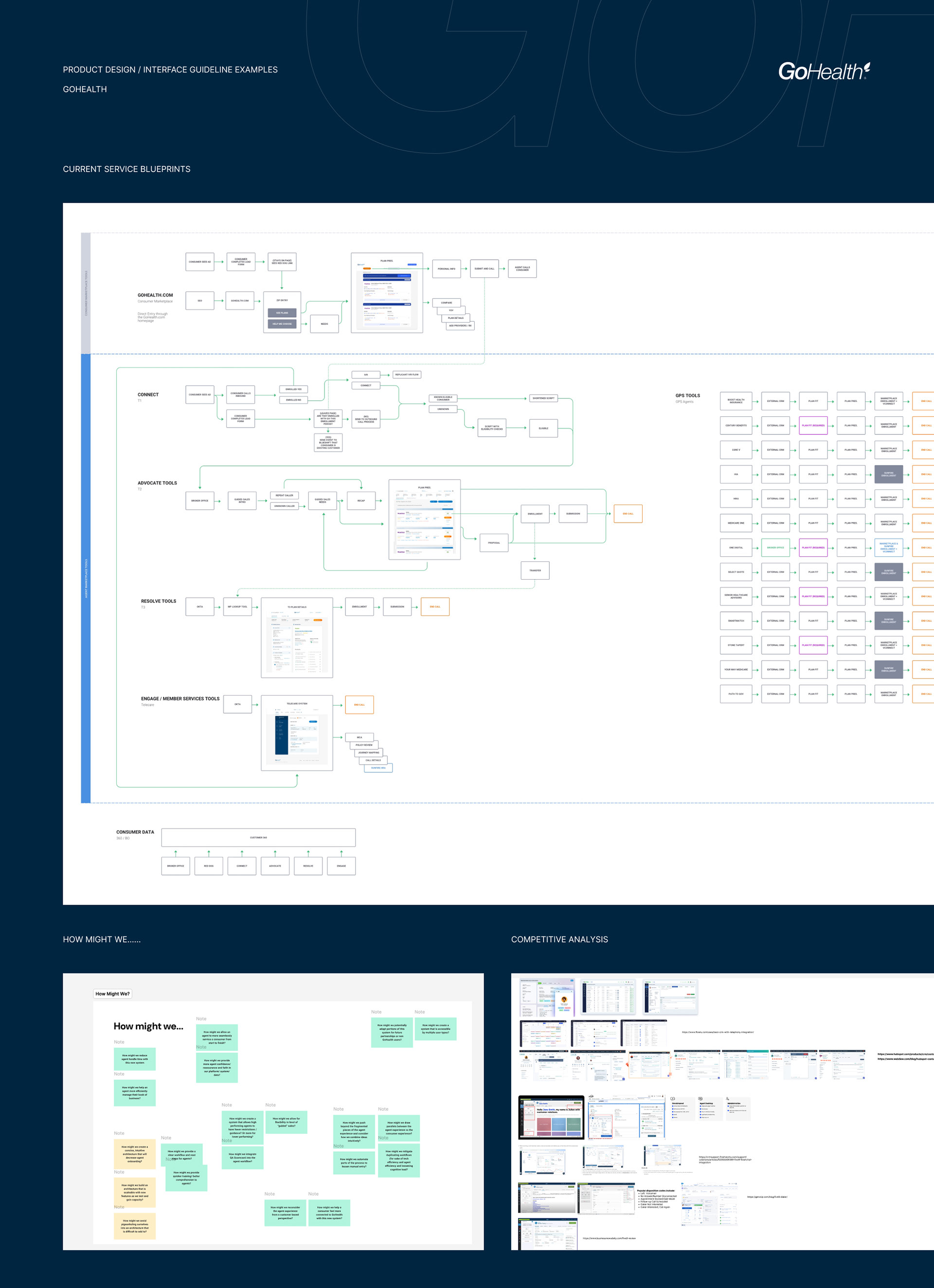
Framed Opportunities: Developed "How Might We" statements to align the product team on core problem areas.
Competitive Analysis: Evaluated industry-standard CRMs to identify UX benchmarks and feature gaps.
We began by uncovering deep insights into user needs and market standards:
Framed Opportunities: Developed "How Might We" statements to align the product team on core problem areas.
Competitive Analysis: Evaluated industry-standard CRMs to identify UX benchmarks and feature gaps.
User Research & Co-Creation
To build a tool agents actually loved, we put them at the center of our design process:
Agent Cohort Workshops: Hosted collaborative sessions with real agents to map pain points and daily habits.
Co-Design Sessions: Ran interactive workshops to brainstorm feature prioritization directly with internal users.
To build a tool agents actually loved, we put them at the center of our design process:
Agent Cohort Workshops: Hosted collaborative sessions with real agents to map pain points and daily habits.
Co-Design Sessions: Ran interactive workshops to brainstorm feature prioritization directly with internal users.
Iterative Design & Validation
We moved quickly from abstract ideas to concrete, validated interfaces:
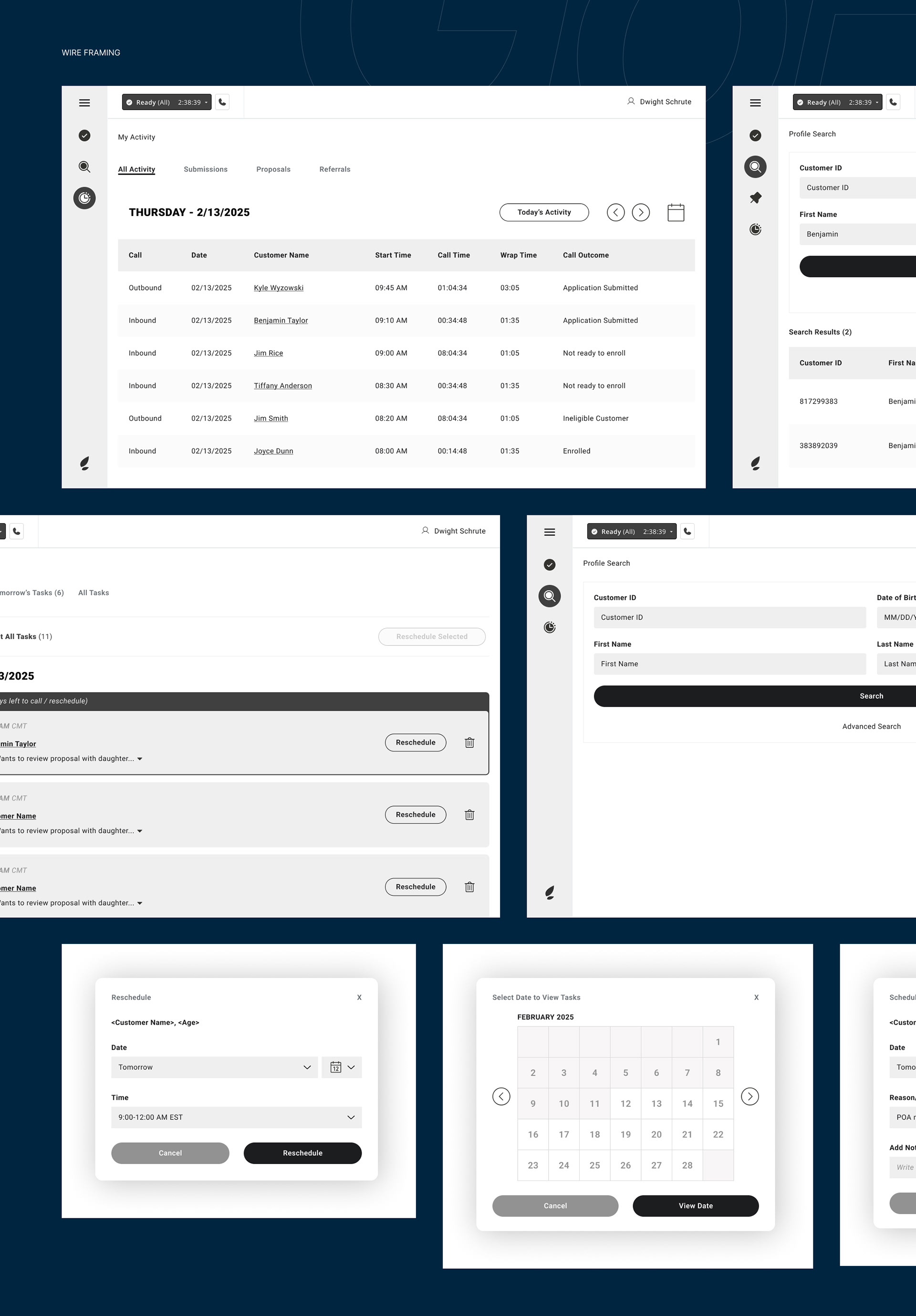
Wireframing: Built low-fidelity wireframes to rapidly map out information architecture and data density.
User Validation: Tested wireframes with agent cohorts to iterate on layout intuitiveness before high-fidelity production.
Leadership Alignment: Presented research findings and validated wireframe concepts to executive leadership to secure buy-in.
System & Interface Production
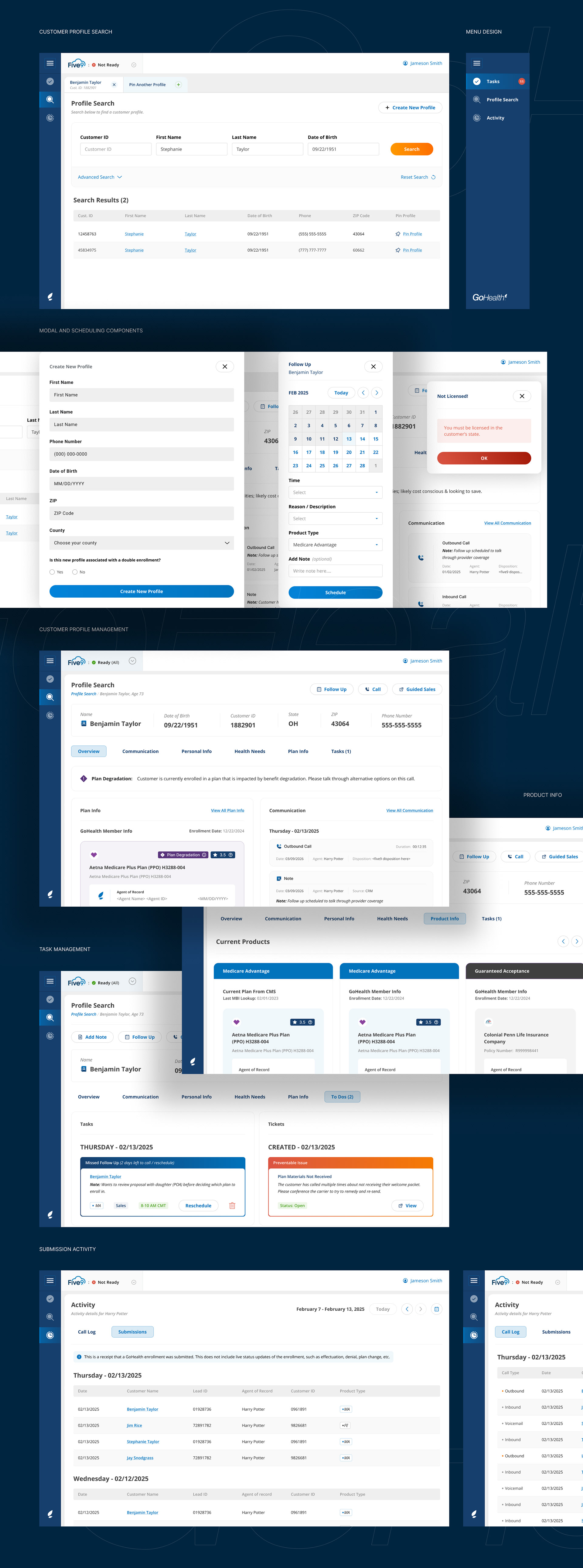
The final phase focused on scalability and pixel-perfect design execution:
Core UX/UI Delivery: Strategic architecture and governance, directing the overall user experience strategy, data-density models, and scalable enterprise design systems.
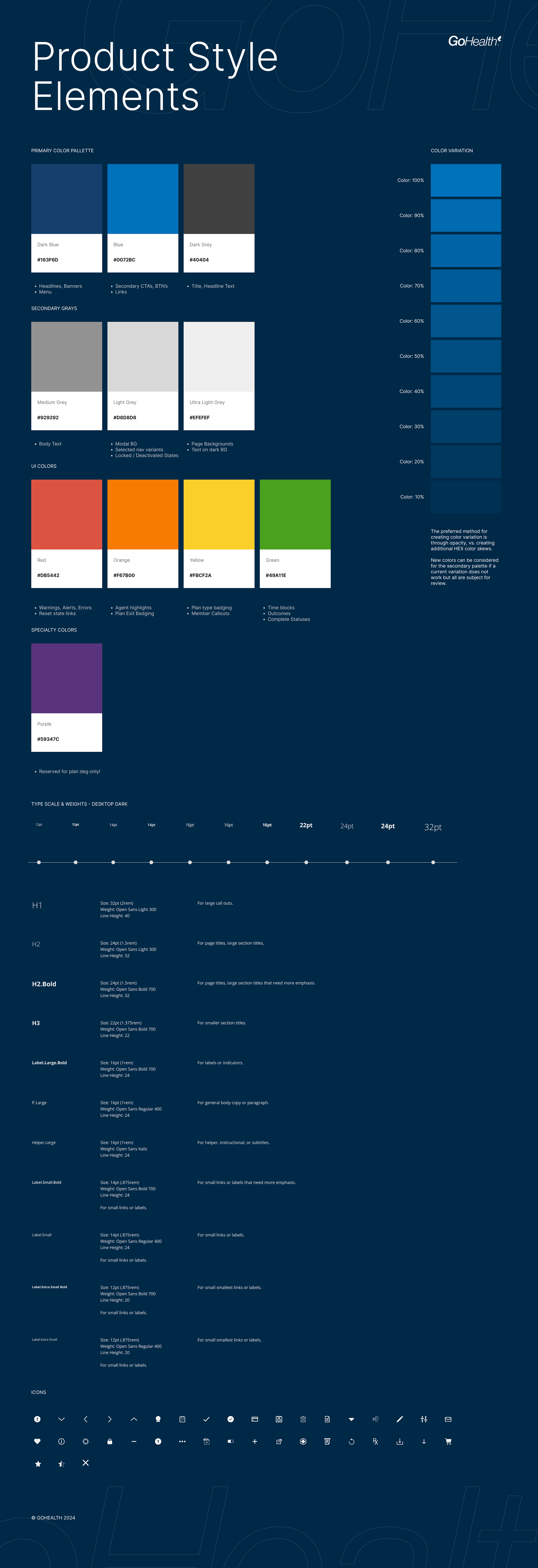
Scalable Design System:
Created a robust, component-based design system from scratch to ensure UI consistency and speed up engineering deployment.
The Impact
By moving our customer management in-house, this project established:
Unified Workflows: Agents no longer context-switch between external apps, drastically reducing handling times.
Data Independence: Total control over internal security and customer data architecture, while eliminating SaaS licensing overhead,
Design Velocity: Accelerating future deployment cycles by up to 50% via a foundational design system.